
Staff Selection
Q: Which is more important?
A. - Having the right players or
B. - Having the right coaches?
Most coaches would answer this question #1, but it’s absolutely #2.
As coaches we all know that players certainly can and do matter, but the right coaching is the most important thing that will determine your teams and players overall success.
In a recent interview Head Coach of the New England Patriots, Coach Bill Belichick said this "Good players can't overcome bad coaching, it's impossible"
At Calloway Football we agree 100% with Coach Belichick. It is critically important to hire and put together a quality coaching staff that meets the following criteria.
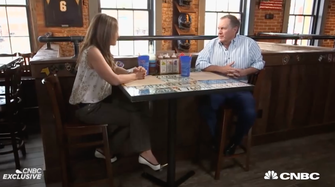
"Good players can't overcome bad coaching, it's impossible"
- Coach Bill Belichick, Head Coach New England Patriots
- Coach Bill Belichick, Head Coach New England Patriots
Foundation and Criteria to Putting Together a Quality Staff
Ensure assistant coaches have Knowledge of their position — or a willingness to learn. If you can find coaches with experience, outstanding. But you may have to train them as you go in that case they have to be willing to learn.
Chemistry with the other coaches on your staff. You’re going to be spending a lot of time together. Make sure you’re going to want to. One bad coach can make for a miserable season. The entire staff MUST be on the same page and enjoy coaching together or failure is almost certain.
A willingness to follow head coaches lead. The head coach is the captain of the ship. The people on your staff MUST to be able to accept that.
The right personality - You have to know the personality of every coach and make sure they’re a team player.
Before ever allowing a coach to be on staff, make sure your coaches fully understand and agree to the following:
1. They will follow your lead at all times.
2. They will stand up for the coaching staff in every situation.
3. They have to be on the same page and have each other’s back at all times, no matter what.
4. A divisive personality will not be tolerated.
All assistant coaches must be 100% on board with this philosophy or DO NOT allow them onto your staff.
Ensure assistant coaches have Knowledge of their position — or a willingness to learn. If you can find coaches with experience, outstanding. But you may have to train them as you go in that case they have to be willing to learn.
Chemistry with the other coaches on your staff. You’re going to be spending a lot of time together. Make sure you’re going to want to. One bad coach can make for a miserable season. The entire staff MUST be on the same page and enjoy coaching together or failure is almost certain.
A willingness to follow head coaches lead. The head coach is the captain of the ship. The people on your staff MUST to be able to accept that.
The right personality - You have to know the personality of every coach and make sure they’re a team player.
Before ever allowing a coach to be on staff, make sure your coaches fully understand and agree to the following:
1. They will follow your lead at all times.
2. They will stand up for the coaching staff in every situation.
3. They have to be on the same page and have each other’s back at all times, no matter what.
4. A divisive personality will not be tolerated.
All assistant coaches must be 100% on board with this philosophy or DO NOT allow them onto your staff.
Executive Roles
Coaching Role / Position |
Responsibilities |
Head Coach |
|
Assistant Head Coach |
|
Offensive Coordinator (OC) |
|
Defensive Coordinator (DC) |
|
Special Teams Coordinator |
|
Additional Notes |
In most all cases in youth football the coaches in a executive role are also coaching a position group. |
Offensive Positions Coaches & Roles
Coaching Roles / Position |
Responsibles |
Offensive Line Coach |
|
Quarterbacks Coach |
|
Wide Receivers Coach |
|
Running Backs Coach |
|
Defensive Positions Coaches & Roles
Coaching Roles / Position |
Responsibles |
Defensive Line Coach Defensive End Coach |
|
Linebackers Coach |
|
Defensive Backs CB Coach Safety Coach |
|

Unbreakable Coaching Rules
We have developed four unbreakable coaching rules based on over three decades of experience.
RULE 1: The Head Coach is in Charge
The head coach sets the philosophy, tone, & direction for the entire team. If an assistant coach can’t abide by that, he can’t be on the coaching staff.
RULE 2: Coaches Should Never Disagree Publicly
Coaches should never disagree with one another in front of the team, individual players, or parents for any reason at any time. When disagreements arise, the coaches discuss it as a staff in private, in a professional manner.
Once the head coach decides the outcome, it is over. End of conversation.
RULE 3: Coaches Should Always Show a United Front
A coach cannot get into a negative or finger-pointing conversation with a parent or someone else outside the coaching staff.If a coach sides with a parent against the head coach, that coach must be removed from the staff immediately. If he wants to act like a parent, he can go be a parent.
Publicly, coaches should only express support for the head coach and other members of the staff. In cases where an outsider has a legitimate point, the coach can take the matter to the head coach in private, without the outsider.
RULE 4: Never Discuss Another Player
Coaches must never discuss a player’s role or performance with anyone who is not that player’s parent.
We have developed four unbreakable coaching rules based on over three decades of experience.
RULE 1: The Head Coach is in Charge
The head coach sets the philosophy, tone, & direction for the entire team. If an assistant coach can’t abide by that, he can’t be on the coaching staff.
RULE 2: Coaches Should Never Disagree Publicly
Coaches should never disagree with one another in front of the team, individual players, or parents for any reason at any time. When disagreements arise, the coaches discuss it as a staff in private, in a professional manner.
Once the head coach decides the outcome, it is over. End of conversation.
RULE 3: Coaches Should Always Show a United Front
A coach cannot get into a negative or finger-pointing conversation with a parent or someone else outside the coaching staff.If a coach sides with a parent against the head coach, that coach must be removed from the staff immediately. If he wants to act like a parent, he can go be a parent.
Publicly, coaches should only express support for the head coach and other members of the staff. In cases where an outsider has a legitimate point, the coach can take the matter to the head coach in private, without the outsider.
RULE 4: Never Discuss Another Player
Coaches must never discuss a player’s role or performance with anyone who is not that player’s parent.
|
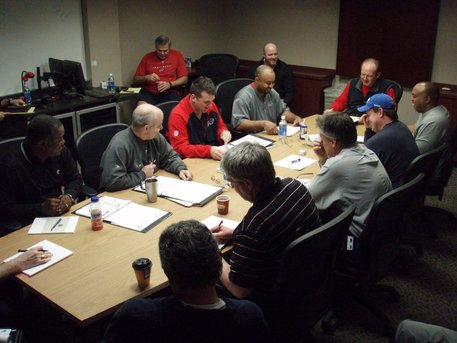
First Coaches’ Meeting
The purpose of your first coaches’ meeting is to make sure your staff is all on the same page. In general, there are several topics you want to cover: |
- Your philosophy on every topic, setting clear expectations
- Your offensive philosophy and the basics of the playbook
- Your defensive philosophy and the basics of the playbook
- Make sure each coach fully understands his role and responsibilities.
- Make sure each coach understands the practice structure and what each coach’s role is during practice
- Make sure you cover each rule in detail.
- Make sure every coach is in 100% agreement.
- Cover all of the important dates for the season: Practice start date, practice days/times, dates of interest for your League, etc.
- Discuss and outline the desired method(s) for staff communication during the season: Email, text, phone, etc.
- Ensure everyone is on the same page or it will not work.
Additional Navigation
Training Center Home
Premium Member Library
Online Store
Staff Selection, Management and Development
Parents Meeting and Parents Management
Practice Foundation and Fundamentals
Offensive Introduction and Identity
Offensive Philosophy and Position Profiles
Offensive Line Pass Protection Basics
Defensive Basics
Defensive Philosophy
Tackling Basics
Document Download
PDF Lesson Download
Staff Selection, Management and Development |

PPT Template Download
First Coaches Meeting Presentation |